
As businesses expand, managing people becomes more complex and so does staying compliant. HR compliance is no longer just about following basic rules; it’s about protecting your organisation from legal risks, financial penalties, workplace disputes, and reputation damage. Growing businesses often overlook the importance of updated policies, proper documentation, and lawful employment practices, which can place them at risk without realising it.
From recruitment to termination, every stage of the employee lifecycle requires careful attention. This guide breaks down the essential elements of compliance, giving business owners and HR teams the clarity they need to navigate today’s workforce requirements.
HR compliance refers to the ongoing process of developing, implementing, and monitoring policies that ensure your business follows all relevant employment laws. It covers everything from workplace safety and payroll accuracy to recordkeeping and employee rights.
As a business grows, so do its obligations. More employees mean larger volumes of documentation, more training requirements, and higher expectations from regulators. Many small and medium-sized businesses fall behind simply because they do not have structured systems in place.
Clear HR compliance processes also promote fairness, reduce misunderstandings, and create a stable work environment where employees feel protected and informed. By establishing standard procedures early, businesses can avoid costly errors, ensure smoother operations, and build a culture of accountability. This proactive approach becomes increasingly important as the organisation continues to scale.
HR policies form the foundation of a compliant workplace. They provide employees with clarity and protect businesses from legal complications. A strong policy suite includes:
Regular training sessions and refresher workshops also help reinforce these policies, ensuring employees fully understand their rights and responsibilities. As businesses grow, new roles, technologies, and operational changes may introduce fresh compliance requirements, making it essential to review and refine policies consistently to maintain a safe, fair, and legally compliant workplace.
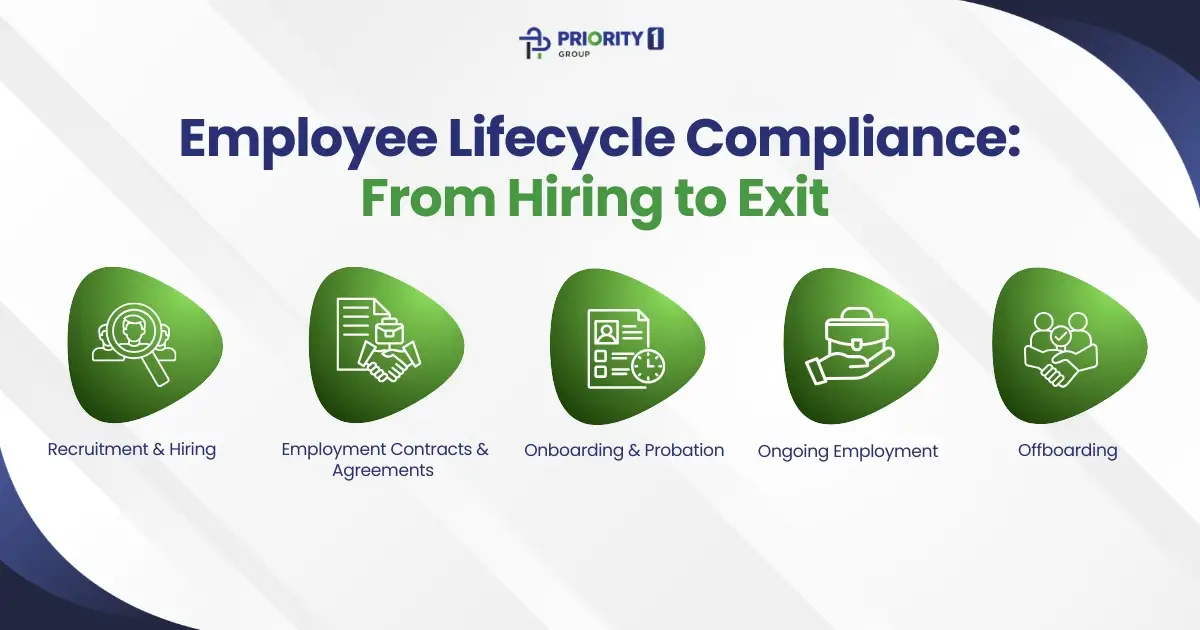
Growing businesses often underestimate the importance of compliance at every stage of the employee lifecycle. Each step recruitment, hiring, onboarding, employment, and exit carries specific legal obligations that protect both the organisation and its employees. Establishing clear, consistent processes helps reduce risks and ensures every team member is managed fairly and lawfully throughout their time with the business.
Ensure job ads meet legislative guidelines and avoid discrimination. Conduct work rights checks and collect required documents. Transparent recruitment practices also help establish trust early in the employment relationship.
Contracts must clearly outline role expectations, salary, award details, and entitlements. A well-drafted contract sets the foundation for compliance and protects the business during disputes.
This includes policy induction, safety training, collecting certificates, and confirming identity documents. Proper onboarding ensures new employees understand expectations and workplace standards from day one.
Maintain accurate payroll, conduct performance reviews, and update records. Regular communication and documentation help employers manage performance issues and legal obligations effectively.
Follow proper notice periods, issue final pay correctly, and document the exit process. A compliant offboarding process protects the business and ensures all legal requirements are met.
A compliance checklist helps businesses stay organised and ensures no critical steps are missed. Your checklist should include:
Using a structured HR compliance checklist keeps your business proactive rather than reactive. It allows you to identify risks early, maintain documentation accuracy, and ensure employees are consistently supported. Regularly reviewing this checklist also prepares your organisation for audits, legislative changes, and ongoing workforce growth with confidence and clarity.
Many businesses unknowingly expose themselves to risk due to simple oversights. Common mistakes include:
These mistakes may seem small but can quickly lead to serious legal, financial, and operational consequences if not addressed. By recognising these risks early and strengthening internal processes, SMEs can create safer, more compliant workplaces while protecting their reputation and ensuring long-term stability as their business continues to grow.
Workplace safety is a critical component of HR compliance. Businesses must establish WHS frameworks that address training, hazard management, reporting, and emergency procedures. This includes maintaining incident logs, offering safety inductions, and conducting regular risk assessments.
Whether employees work onsite, remotely, or in hybrid environments, safety obligations still apply. Employers must ensure they provide a safe working environment and proper documentation to prove it.
Proactive safety management not only reduces the likelihood of accidents but also builds a culture of trust and accountability. Regular reviews, clear communication, and accessible safety resources ensure employees understand their responsibilities. When combined with strong HR compliance processes, workplace safety becomes a powerful tool for protecting people and strengthening organisational performance.
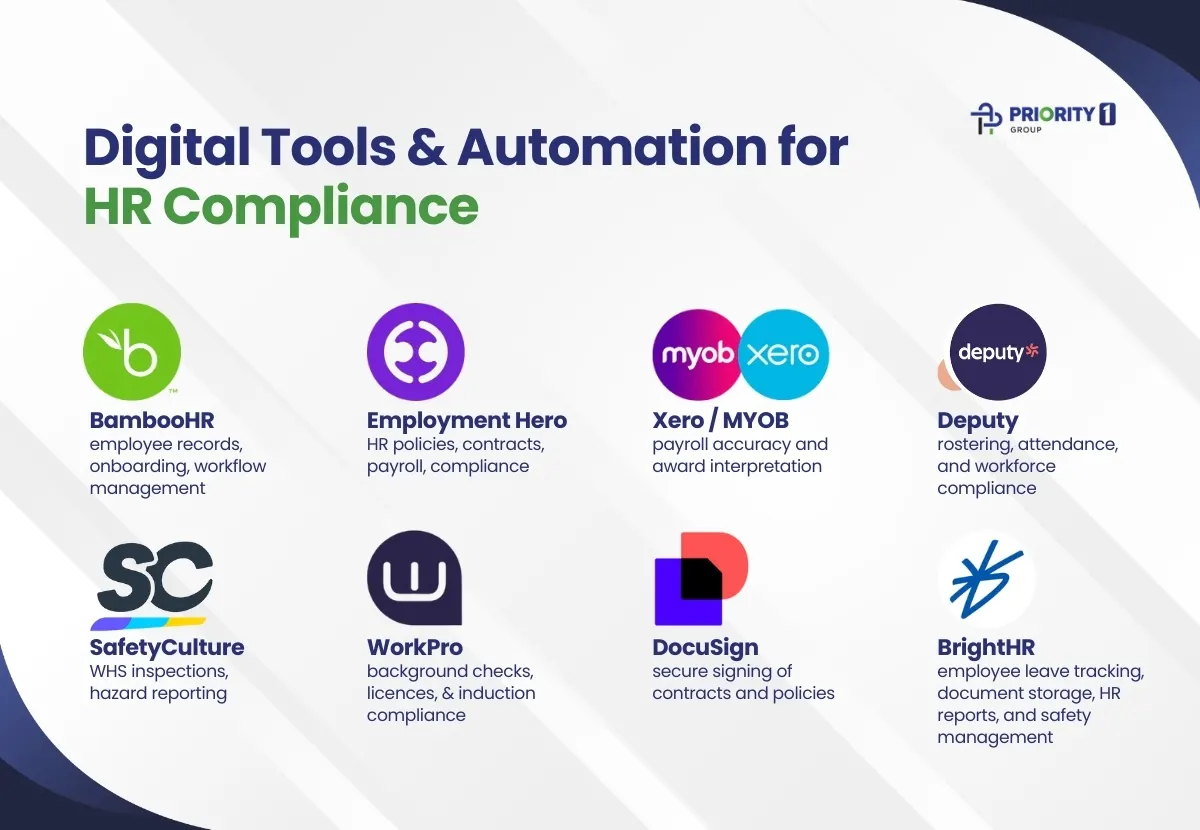
Technology plays a major role in modern HR. Digital platforms help manage documents, track performance, automate payroll, and send alerts for training renewals or certificate expiries.
Some of the most effective HR compliance tools include:
Small growing teams often rely on manual processes, which lead to missed deadlines, outdated records, and compliance gaps. Implementing HR software early reduces risk and increases efficiency. Automated systems ensure policies are acknowledged, timesheets are accurate, licences stay current, and mandatory training is completed on time. These tools also create strong audit trails, helping businesses demonstrate compliance during audits or Fair Work inspections. By adopting digital HR solutions early, employers streamline workflows, minimise human error, and maintain consistent, reliable compliance across every stage of the employee lifecycle.
Compliance is more than just following rules it’s a safeguard for your business. Proper HR management reduces legal risks, enhances employee trust, and builds a strong organisational culture grounded in fairness and transparency. When businesses maintain accurate documentation, follow lawful hiring practices, and uphold safety standards, they minimise the likelihood of disputes or financial penalties. Strong compliance frameworks also contribute to higher employee retention, smoother internal processes, and a more stable workplace environment. Ultimately, investing in HR compliance ensures your business remains protected, reputable, and well-positioned for long-term growth as your workforce expands.
Priority1 Group specialises in helping businesses streamline and strengthen their HR and compliance processes. From policy creation and onboarding management to payroll accuracy and documentation control, our team ensures your business meets every regulatory requirement with confidence.
We support growing organisations by implementing structured HR frameworks, audit-ready systems, and ongoing compliance monitoring. Whether you’re scaling your team or preparing for an audit, our experts ensure your HR foundation remains strong, organised, and legally sound.
HR compliance is essential for any growing business aiming to protect its people, reputation, and long-term goals. By understanding legal obligations, implementing strong policies, and maintaining accurate documentation, businesses can reduce risks and create safer, more productive workplaces. With the right tools and expert support, compliance becomes simpler and growth becomes sustainable.
By staying proactive, regularly reviewing processes, and adapting to legislative changes, businesses can prevent costly mistakes before they occur. Consistent training and clear communication further strengthen workplace culture and employee confidence. When HR compliance is prioritised, organisations operate more efficiently and are better prepared to scale responsibly and successfully.
