
Client bookkeeping solutions are outsourced or tech-assisted services that record, reconcile and report a business’s finances for it. They cover day-to-day transactions, payroll, BAS and GST. For Australian small and medium businesses, the right solution means records that are always ready for the ATO, a clear view of cash flow, and hours back each week to run the business.
This guide covers what bookkeeping involves, what a client bookkeeping solution adds, the types available, how to choose one, and what setup looks like.
Bookkeeping is the regular recording and organising of every financial transaction in your business. It is the foundation for accurate accounting, tax lodgements and decision-making. In Australia it is also a legal requirement: the ATO requires most business records to be kept for five years.
Bookkeeping keeps the enterprise’s finances up-to-date and running smoothly.
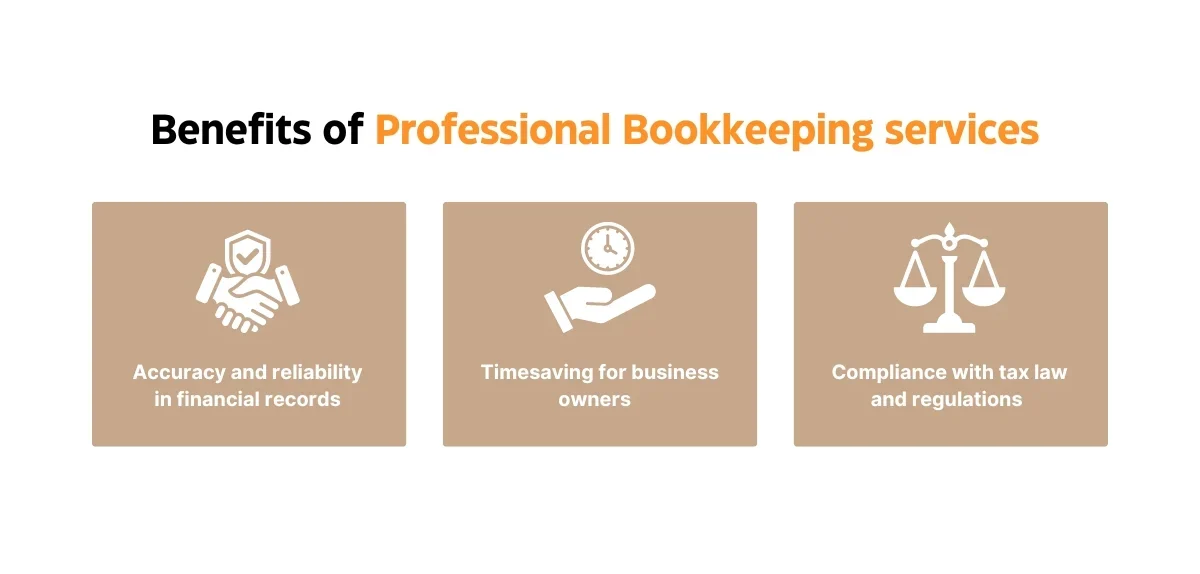
Accurate financial records give insight and clarity into profits, cash flow and financial performance of the enterprise. This insight is vital for making strategic decisions, deciding how to improve and plan.
Clean, reconciled records mean your profit and loss, balance sheet, and cash flow reports can be trusted. This matters for lenders, investors and your own decisions.
Most small business owners spend several hours a week on admin. Handing bookkeeping to a professional frees that time for customers, staff and growth.
A professional bookkeeper keeps track of BAS deadlines, GST obligations, STP reporting and superannuation changes. This reduces the risk of ATO penalties and interest.
A client bookkeeping solution is bookkeeping delivered as a service and shaped around your business. It goes beyond data entry. A good solution combines a qualified bookkeeper, cloud accounting software and a regular reporting rhythm, so you always know where your numbers stand.
A café, a construction company and an NDIS provider all have different bookkeeping needs. Each has its own transaction volumes, payroll complexity, award rates and reporting requirements. A tailored solution sets up the chart of accounts, tracking categories and reports to fit how your business actually runs.
The best solutions connect to the tools you already use. That means Xero, MYOB or QuickBooks, your bank feeds, your point-of-sale or job-management system, and receipt-capture apps such as Dext or Hubdoc. Data then flows in automatically instead of being keyed in by hand.
The right time to bring in a bookkeeper is usually earlier than owners expect. Look for these signs:
If two or more of these apply, a client bookkeeping solution will usually pay for itself in time saved and penalties avoided.
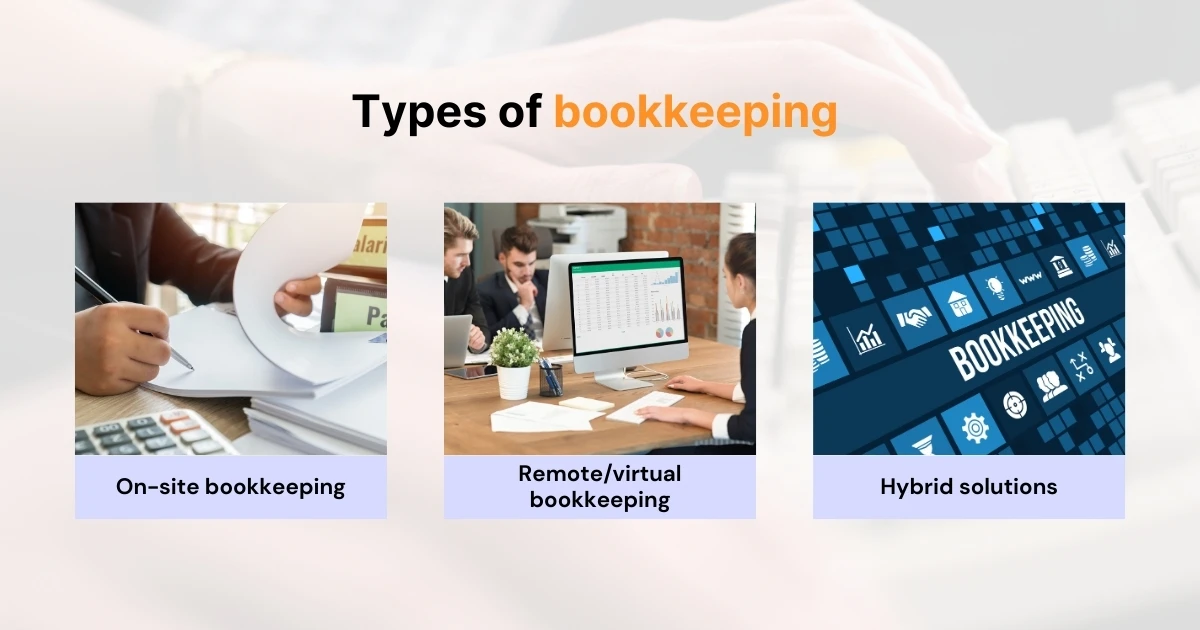
Bookkeeping solutions work to help enterprises manage their financials effectively. There are three types of client bookkeeping solutions according to preferences:
Any client bookkeeping solution for an Australian business should handle these obligations as standard:
Obligation | What it involves | Key timing |
BAS and GST | Reporting GST collected and paid, PAYG withholding and PAYG instalments | Quarterly: 28 Oct, 28 Feb, 28 Apr, 28 Jul. Monthly: 21st of the following month |
GST registration | Required once turnover reaches $75,000 | Within 21 days of reaching the threshold |
Single Touch Payroll (STP Phase 2) | Reporting wages, tax and super to the ATO each pay run | Every payday |
Superannuation Guarantee | 12% of ordinary time earnings | From 1 July 2026, Payday Super: paid with wages and received by the fund within 7 business days |
Record keeping | Keeping transaction records, invoices and payroll records | 5 years |
Registered BAS agents can often get extended lodgement dates. That is another reason to work with a registered professional.
Effective bookkeeping services are fundamental to the success of your enterprise. As enterprises grow, there are various technological advancements that bookkeeping service providers (BSPs) use to become indispensable for business growth. At this juncture with the availability of seemingly endless solutions, it is vital that as a small and medium business owner, you choose the right bookkeeping service for your business.
Start with your transaction volume, the number of staff on payroll, any industry-specific rules (such as NDIS claiming or construction TPAR reporting) and the reports you need each month.
Check that the provider is a registered BAS agent with the Tax Practitioners Board, has certifications in your accounting software, and has experience in your industry. Ask for client references.
Compare fixed-fee packages with hourly billing, and weigh the price against time saved, penalties avoided and better decisions.
Option | Best for | Typical trade-off |
|---|---|---|
DIY with software | Sole traders with low transaction volume | Cheapest, but uses the owner’s time and risks errors |
In-house bookkeeper | Larger businesses with daily, complex transactions | Full control, but brings salary, super and leave costs |
Outsourced client bookkeeping solution | Growing SMEs that need expertise without a full-time hire | Predictable fee and a registered BAS agent, but less on-site presence |
Implementing bookkeeping solutions for your business is important for businesses. You can follow few important steps to integrate bookkeeping solutions into your business.
During initial consultation, a BSP lists out the business’s questions and concerns before beginning the service. It provides information about the business, from the important bookkeeping parts to the most complex issues of tax, accounting and operations. Through this, you learn about their needs and helps you prepare according to it.
You can manage multiple clients by your efficiency. You can gain efficiency through bookkeeping technological solutions and automation tools like cloud-based accounting software to streamline your bookkeeping processes.
You need to:
Good client bookkeeping support continues after setup. Expect a named bookkeeper who codes and reconciles transactions each week or month, and who prepares and lodges BAS and processes payroll. They should also answer questions within an agreed time and flag issues before they become problems, such as an unexpected GST liability or a shortfall in super payments.
Reviewing and updating your bookkeeping needs on a regular basis helps to ensure accuracy, adherence to compliance regulations, and transparency in reporting your finance. This also helps t to prevent fraud, legal issues and incoherence.
Client bookkeeping analysis means using your reconciled records to answer business questions, not just meet compliance. A good solution should give you a short monthly pack that covers:
This is where outsourced bookkeeping becomes a management tool and stops being only a cost.
The right client bookkeeping solution gives Australian businesses accurate records, on-time BAS and payroll, and the financial clarity to make better decisions. Priority1 Group’s bookkeeping team in Brisbane provides tailored, remote bookkeeping for SMEs and NDIS providers across Australia, including BAS, payroll, reconciliations and monthly reporting.