LinkedIn has quietly become the most powerful lead generation platform for B2B businesses. Not because it’s trendy, but because it’s where decision-makers think, research, and evaluate long before they ever fill out a contact form.
Yet many B2B companies struggle on LinkedIn. They post consistently but see little return. They run ads that generate clicks but not conversations. They connect with hundreds of people but rarely convert them into qualified leads.
The difference between average and high-performing B2B businesses on LinkedIn isn’t activity it’s strategy.
This guide breaks down how smart B2B businesses use LinkedIn intentionally to attract high-quality leads, build trust at scale, and create predictable pipeline growth. Whether you’re a professional services firm, technology provider, or B2B consultancy, the principles below will help you turn LinkedIn into a revenue-driving asset.
Unlike platforms built for entertainment or impulse content, LinkedIn is designed for professional intent. Users log in to learn, research, hire, sell, and grow not to scroll mindlessly.
For B2B businesses, this means conversations start at a higher level of intent. When someone engages with your content on LinkedIn, they are often already thinking about business problems, solutions, and opportunities.
This is why B2B LinkedIn marketing consistently outperforms other social platforms for high-ticket and long sales-cycle services.
LinkedIn allows targeting by:
This makes it one of the few platforms where you can reliably reach founders, directors, executives, and procurement leaders without relying solely on paid ads. By showing up consistently with relevant insights, businesses can build familiarity and trust over time. This often leads to warmer conversations and higher-quality leads when decision-makers are ready to engage.
Today’s B2B buyers are more informed than ever. They rarely respond to cold pitches or aggressive sales messages. Instead, they observe first reading posts, reviewing insights, and assessing credibility before engaging in a conversation. LinkedIn supports this behaviour by giving businesses a platform to consistently share expertise, industry knowledge, and practical insights.
By showing up with value rather than sales pressure, businesses can build trust at scale. When a prospect finally reaches out or responds, the relationship already feels familiar, informed, and far more likely to convert into a meaningful business conversation.
High-quality leads are rarely generated from a single post or message. They come from aligning content and outreach with the buyer’s journey.
At this stage, buyers aren’t looking for vendors they’re recognising problems within their business or processes.
This is where B2B lead generation truly begins by earning attention without selling and positioning your business as a relevant, trusted voice.
Here, buyers are comparing options and evaluating which businesses truly understand their challenges.
You’re not pitching you’re positioning yourself as someone who understands the problem deeply, demonstrates credibility through real-world results, and builds confidence that you can deliver value when the time comes to engage.
This is where direct messages, lead forms, or consultation links become effective. Because trust already exists, conversations feel natural rather than forced. Prospects are more open to discussions, ask clearer questions, and engage with intent. Instead of convincing them to talk, your role is to guide the conversation, understand their needs, and explore whether your solution is the right fit.
In B2B, people buy from people. This is why personal LinkedIn profiles consistently outperform company pages when it comes to generating conversations and leads. A well-optimised profile should clearly communicate value within seconds.
Key optimisation areas include:
A strong personal profile acts like a landing page that works for you 24/7, building trust even when you’re not actively engaging.
While personal profiles drive conversations, company pages support credibility.
Your company page should clearly communicate:
Explore our B2B digital marketing services: Here
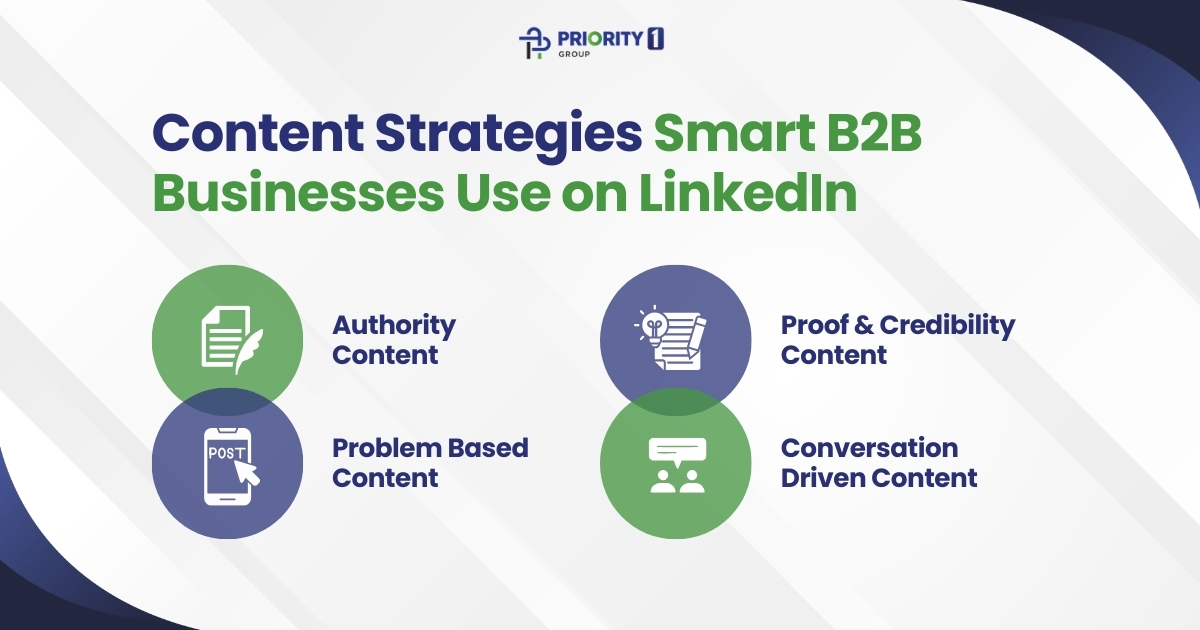
Authority content shows that you understand your industry, not just the surface-level trends. It helps position your business as knowledgeable and reliable. Sharing insights about market shifts, regulatory changes, or common operational challenges builds trust over time. This type of content doesn’t need a sales pitch it works by helping your audience feel informed and confident in your expertise.
Problem-based posts work because they reflect real situations businesses experience every day. They speak directly to frustrations your audience recognises. Posts like “If your sales pipeline looks healthy but revenue isn’t growing…” help decision-makers feel understood and encourage engagement because the problem feels personal and relevant.
Trust grows faster when people see real results. Sharing client outcomes, before-and-after examples, or lessons from past campaigns makes your expertise tangible. This is where a LinkedIn lead generation strategy for B2B companies starts turning attention into genuine confidence.
Not every post needs to educate. Simple questions, opinions, or industry debates invite discussion and meaningful conversations often lead to stronger business opportunities than clicks alone.
Cold pitching fails because it ignores context. Warm outreach works because it builds familiarity first and respects the buyer’s journey. When someone has already seen your content or profile, your message feels more natural and less intrusive.
Effective sequence:
Instead of pitching straight away, reference something specific from their profile or recent post, ask a relevant question, and keep the tone conversational. This approach creates genuine dialogue and aligns perfectly with how to generate B2B leads on LinkedIn without damaging trust.
Avoid long sales messages, generic templates, and immediate meeting requests. The goal is conversation, not conversion at least initially. Focus on connection first; business opportunities follow naturally.
LinkedIn ads work best when your offer is high-value, your ideal customer profile (ICP) is clearly defined, and you have a reliable follow-up system in place. Without these foundations, ad spend can increase without delivering meaningful results.
These formats perform well because they keep prospects within LinkedIn, reducing friction and improving conversion rates.
Common mistakes include sending traffic without nurturing, poor targeting, and having no CRM or follow-up strategy. Ads should support a broader lead nurturing process, not replace it.
Vanity metrics don’t pay invoices. Instead of focusing on likes or impressions, track profile views from decision-makers, DM replies, booked calls, and cost per qualified lead. High-performing B2B businesses treat LinkedIn like a sales channel, not just a content platform.
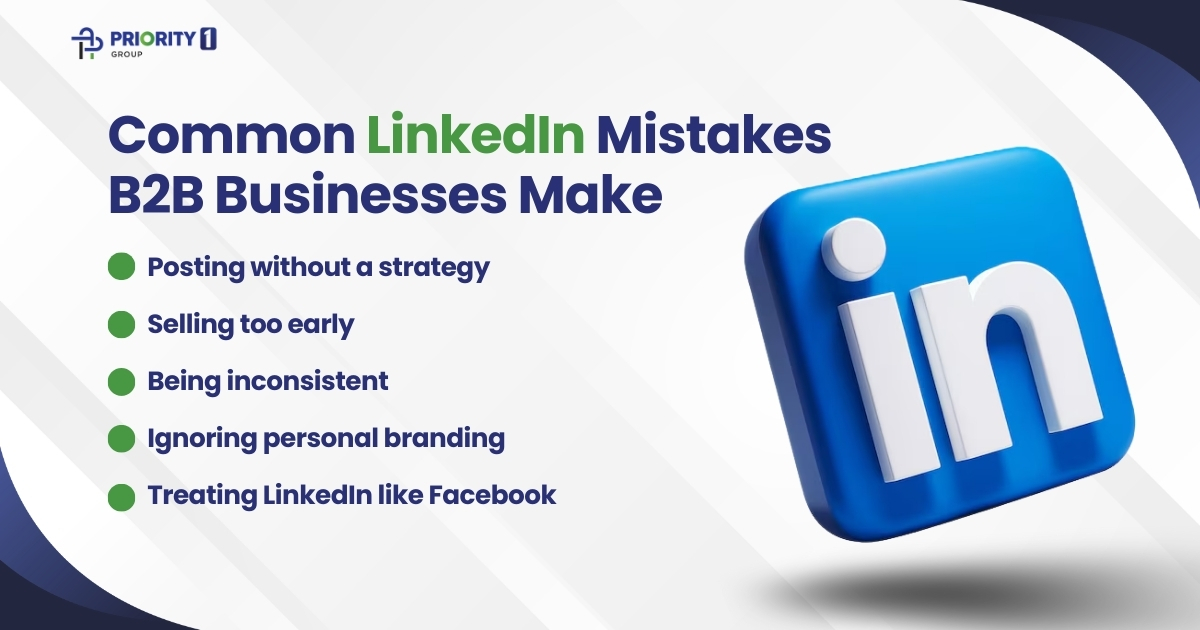
Avoiding these common mistakes alone can significantly improve lead quality, engagement, and the chances of starting meaningful business conversations.
At Priority1 Group, we help B2B businesses turn LinkedIn into a predictable lead generation engine not through shortcuts or hacks, but through proven strategy and consistent execution. Our focus is on building long-term visibility, credibility, and high-quality conversations with decision-makers.
Our approach includes:
We focus on building authority first because authority converts better than ads alone.

LinkedIn isn’t about going viral or chasing likes. It’s about visibility, credibility, and conversation repeated consistently over time and aligned with your business goals.
Smart B2B businesses understand this. They invest in positioning, content, and relationships, rather than quick wins. As a result, LinkedIn becomes one of their strongest sources of high-quality leads and long-term opportunities.
When used correctly, LinkedIn doesn’t just generate leads it builds trust before the first call even happens. That trust shortens sales cycles and improves conversion quality.
If you’re ready to move beyond random posting and turn LinkedIn into a structured growth channel, the opportunity is already there. The strategy just needs to match it.