The common thread for 2027 is accountability. Businesses are spending more on creators but expect proof of results, and regulators expect proof of honesty.
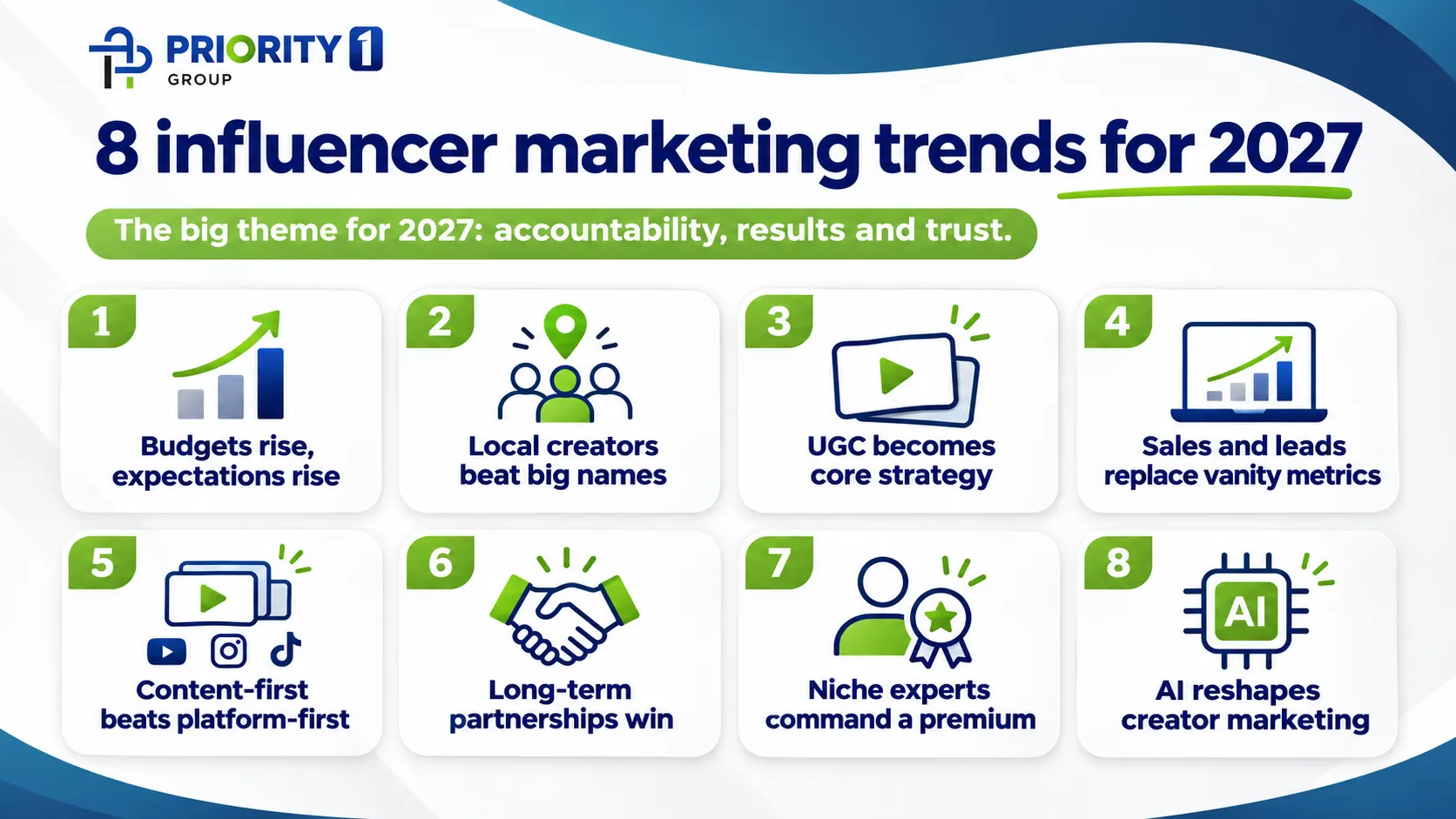
Marketers are not pulling back. In the Influencer Marketing Hub Benchmark Report 2026, 87.49% of marketers expected their influencer budget to rise, and only 5.55% expected it to fall.
What it means for you: More of your competitors will try influencer marketing in 2027. Those who plan, track and stay compliant will get the results; those who send free products and hope will not.
Try this: Set aside a small test budget for one quarter and decide in advance what counts as success, such as 20 bookings or 50 sales.
The money is moving down to smaller creators. In Collabstr’s 2026 report, based on more than 21,000 collaborations, nearly 80% of collaborations cost under $300 and only 2% exceeded $1,000. Collabstr also names local and neighbourhood influencers as a rising trend.
What it means for you: A Brisbane café gets more from a local foodie with 6,000 engaged followers in its suburb than from a national lifestyle star with 500,000 followers spread across the country.
Try this: Search Instagram and TikTok for your suburb or city plus your category (“Paddington brunch”, “Brisbane real estate”). Shortlist creators whose followers comment, not just like.
UGC means creators make content for you to post on your own channels and ads, rather than posting it to their own audience. In Collabstr’s data, UGC campaigns roughly doubled year over year, now make up 35% of all collaborations, and average under $197.
What it means for you: You can get authentic, scroll-stopping content for your social media and ads without paying for a creator’s reach.
Try this: Agree usage rights in writing before work starts: where you can use the content, for how long and whether you can run it as a paid ad.
Vanity metrics are out. Sprout Social reports that pay is increasingly tied to conversions and direct return on investment, not reach.
What it means for you: You should know exactly which creator brought in which customer.
Try this: Give each creator a unique discount code and a tracked link (UTM), send traffic to a dedicated landing page, and check results in Google Analytics. Consider a small base fee plus a bonus per sale or booking.
TikTok is no longer the automatic choice. In Collabstr’s 2026 data, TikTok-specific campaigns fell 48% year over year, behind both Instagram and platform-agnostic UGC. Short-form video drives reach, while long-form YouTube leads on engagement.
What it means for you: Brief creators for content that works across Instagram Reels, TikTok, Facebook and YouTube Shorts, rather than one platform.
Try this: Ask for one main video plus two or three short cut-downs you can reuse on each channel.
Audiences trust a creator who uses the same product for months. Metricool notes the shift toward multi-month and multi-year partnerships. Influee suggests putting at least 40–50% of your influencer fee budget into repeat partnerships.
What it means for you: Three posts over three months from one creator usually beat three posts from three different creators in one week.
Try this: Start with a one-off trial, then offer the best performer a three- or six-month ambassador deal.
Collabstr names skilled trades, education, entrepreneurship and health as the fastest-growing and most expensive niches. B2B creator marketing on LinkedIn is also rising.
What it means for you: Tradies, accountants, allied health and B2B service businesses can now find creators who speak directly to their buyers. Expect to pay more per post, but expect warmer leads.
Try this: Look for practitioners who already post useful content, such as an electrician explaining switchboard upgrades or a bookkeeper explaining BAS deadlines.
CreatorIQ lists AI-driven content creation and virtual influencers among the top trends. AI tools now help businesses find creators, check audience quality and edit content faster.
What it means for you: AI can save time, but it does not change the law. Content that is AI-generated or AI-edited must still be honest, and it must not create a false impression of a real customer’s experience.
Try this: Use AI tools to shortlist and vet creators, but keep a human check on every final post before it goes live.
In Australia, the business that hires the creator is responsible too, not just the influencer. Five sets of rules matter most in 2027.
| Rule | Who enforces it | What it means for your business |
| Australian Consumer Law (misleading conduct) | ACCC | Every paid or gifted post must be clearly disclosed. Never tell creators to hide the deal or edit out criticism. |
| AANA Code of Ethics and AiMCO Code of Practice | Ad Standards; industry | Advertising must be clearly distinguishable as advertising. |
| Therapeutic Goods Advertising Code | TGA | No paid or gifted testimonials for medicines, vitamins, sunscreens and other therapeutic goods. |
| Health Practitioner Regulation National Law (section 133) | Ahpra | No testimonials about clinical care when advertising a regulated health service. |
| Social Media Minimum Age law | eSafety Commissioner | Under-16s cannot hold accounts on 10 major platforms, so youth-targeted influencer campaigns no longer reach them there. |
The ACCC has been watching influencer marketing since its 2023 internet sweep, which found that 81% of the 118 influencers reviewed made posts raising concerns about potentially misleading advertising. Vague labels such as “sp” or “spon” were flagged as not good enough.
In March 2026 the ACCC moved from warnings to penalties. PhotobookShop paid $39,600 under two infringement notices after it told influencers not to disclose free products in 107 reviews between August 2024 and September 2025. The gifts were worth only $50 to $400 each. The business also edited an influencer’s video to remove criticism of one of its tools.
The stakes are now much higher. From 28 March 2026, the maximum penalty for a company that engages in misleading conduct doubled to $100 million per contravention, or more where three times the benefit or 30% of turnover is higher.
The ACCC has said it will release specific influencer guidelines. Until then, the safest approach is the checklist below.
The AANA Code of Ethics requires advertising to be clearly distinguishable, and the AiMCO Code of Practice gives detailed guidance on how to disclose. In March 2026, the Ad Standards Community Panel upheld a complaint about a TikTok post promoting a beverage that did not disclose the paid partnership.
If you sell therapeutic goods, such as vitamins, sunscreen or some skincare, paid or incentivised testimonials are banned, even if the post is disclosed and the opinion is genuine. Creators can still be paid to endorse the product, for example by showing it, as long as they do not describe their personal experience with it.
If you provide a regulated health service, such as physiotherapy, dentistry or GP care, section 133 of the National Law bans testimonials about clinical care in your advertising. This applies to any person who advertises the service, including an influencer you hire.
Since 10 December 2025, platforms including Facebook, Instagram, Snapchat, TikTok, YouTube and Kick must take reasonable steps to stop under-16s holding accounts. Platforms face fines of up to $49.5 million if they fail to comply. If your product targets young teens, plan for parents as the audience, or use channels outside these platforms.
☐ Put the disclosure requirement in a written agreement with every creator, including for gifted products.
☐ Use the platform’s paid partnership label plus a clear word such as “Ad” or “Paid partnership with [your business]” at the start of the caption.
☐ Never ask a creator to hide the relationship, delete honest criticism or say they bought the product themselves.
☐ Check health, medicine and clinical claims against the TGA Code and Ahpra rules before posting.
☐ Review every post before it goes live and keep a copy of what was published.
The right approach depends on your industry. Here is how we would start for the four sectors we work with most.
See our bars and cafés marketing services.
See our real estate digital marketing services.
See our healthcare digital marketing services.
See our NDIS marketing services.
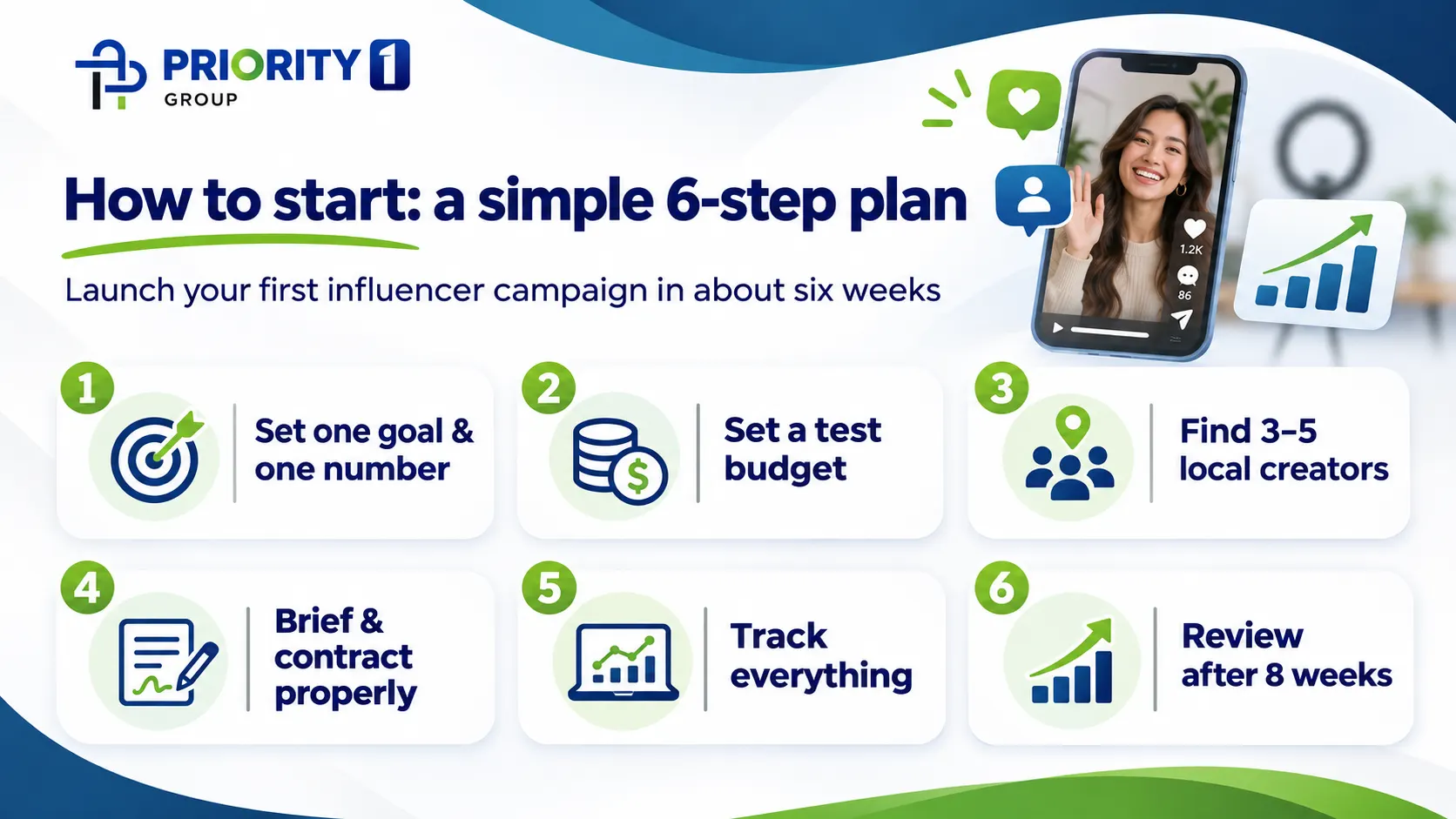
You can run a first influencer campaign in about six weeks with a modest budget.
As a rule of thumb, judge creators on cost per lead or cost per sale, the same way you would judge a Google or Meta ad.
Yes, if you start small and track results. Most collaborations now cost under $300, and local micro-creators often drive more bookings than big names. Judge each creator on cost per lead or sale, just like any other ad.
Micro-influencers typically charge about $100 to $500 per post, while macro-influencers can charge $3,000 to $10,000 or more. Niche, engagement rate, usage rights and exclusivity all change the price. Health, finance and B2B creators usually charge more.
Yes. Under the Australian Consumer Law, a free product counts as payment. The ACCC fined PhotobookShop $39,600 in 2026 for telling influencers not to disclose gifted products. Use the platform’s paid partnership label and a clear word like “Ad”.
Both the creator and the business can be. The ACCC can hold a brand responsible for content it commissioned, especially if it instructed the creator on what to say or not say. Always put disclosure rules in writing and review posts before they go live.
Yes, but with limits. Paid or gifted testimonials about therapeutic goods are banned under the TGA Advertising Code, so creators cannot describe their personal results. Regulated health services also cannot use testimonials about clinical care under Ahpra rules.
An influencer posts content to their own audience, so you pay partly for their reach. A UGC creator makes content for you to post on your own channels and in your ads. UGC is usually cheaper and gives you reusable content.
Since 10 December 2025, under-16s cannot hold accounts on 10 major platforms, including Instagram, TikTok and YouTube. Campaigns aimed at young teens lose that reach, so most businesses now target parents or use other channels.
The ATO treats products received in exchange for content as assessable income at market value. Creators should keep records of gifts and speak to their accountant.
Influencer marketing in 2027 rewards businesses that think small, local and long term, measure every dollar and stay on the right side of the ACCC, TGA and Ahpra. You do not need a celebrity or a big budget. You need the right three creators, a clear brief and honest disclosure.
Need help getting started? Priority1 Group helps Australian businesses find the right creators, write compliant briefs, track results and turn creator content into high-performing social media and paid ads. Talk to our team about a test campaign for your business.
Disclaimer: This article is general information, not legal advice. Check current ACCC, TGA and Ahpra guidance, or speak to a lawyer, before running a campaign in a regulated industry.