

Your sales are up, invoices are rolling out, and your business looks profitable on paper, but your bank account tells a different story. There’s not enough cash to pay wages, rent, or suppliers.
This scenario is known as the cash flow trap, and it’s one of the most common issues facing small and medium businesses in Australia. Many business owners assume that strong sales automatically lead to strong profits, but that’s rarely the case.
According to the Australian Small Business and Family Enterprise Ombudsman, cash flow issues are a leading cause of business stress and failure across the country. The truth is, cash flow and profit are two very different financial indicators, and confusing the two can lead to serious financial consequences.
While profit reflects how much your business has earned over a specific period, cash flow shows how much money is actually available for use.
For example, your business may show a monthly profit of $25,000 on your P&L, but if clients delay payments, that profit isn’t immediately usable. Bills still need to be paid, staff need wages, and operating costs continue.
This highlights the difference between cash flow and profit in small business one represents accounting performance, the other represents financial reality.
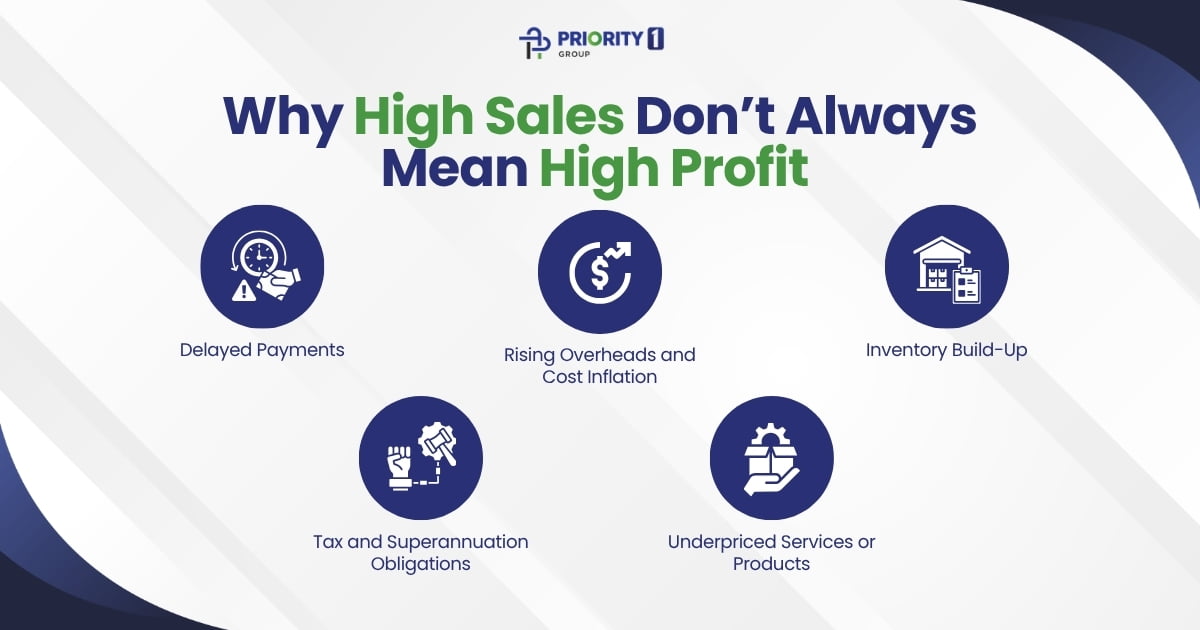
It’s common for business owners to assume that rising sales equal higher profits. However, rapid sales growth can often hide serious cash flow management issues, especially when operating costs and financial obligations grow at the same pace. Below are the key reasons why high sales don’t always translate into strong profitability:
Clients or customers taking 30–60 days to settle invoices can cause serious cash shortages, even when sales appear healthy on paper.
Business growth often comes with increased wages, rent, marketing costs, and utility expenses, which can quickly eat into profit margins.
Over-ordering or holding excess stock ties up funds that could be used for daily operations or reinvestment.
These payments often lag behind sales cycles, creating sudden financial strain when they fall due.
Competing on price may increase sales volume but drastically reduce profit margins, leaving little room for sustainable growth.
Without proactive business cash flow management, even a high-revenue company can face financial stress, limited liquidity, and unstable long-term profitability.
Your Profit and Loss (P&L) statement records your revenue, expenses, and overall profit for a set period, but it doesn’t reflect when money actually moves in or out of your bank account.
For example, if you issue an invoice in April but don’t receive payment until June, your April P&L may look profitable even though your cash reserves are low. This timing difference creates what’s known as a profit and loss discrepancy, where profits appear higher than your real financial position.
To avoid confusion, it’s essential to review both your P&L and cash flow statements regularly. Together, they provide a more accurate and complete picture of your business’s financial health.
The cash flow trap can cripple a business that appears profitable. You may be booking new clients, expanding services, or increasing sales but if payments are delayed, you’ll struggle to meet short-term commitments.
Consequences include:
The trap doesn’t discriminate even successful businesses can find themselves cash-strapped during periods of rapid growth.
This is why consistent monitoring, forecasting, and budgeting are essential to maintaining healthy cash flow especially when sales are strong.
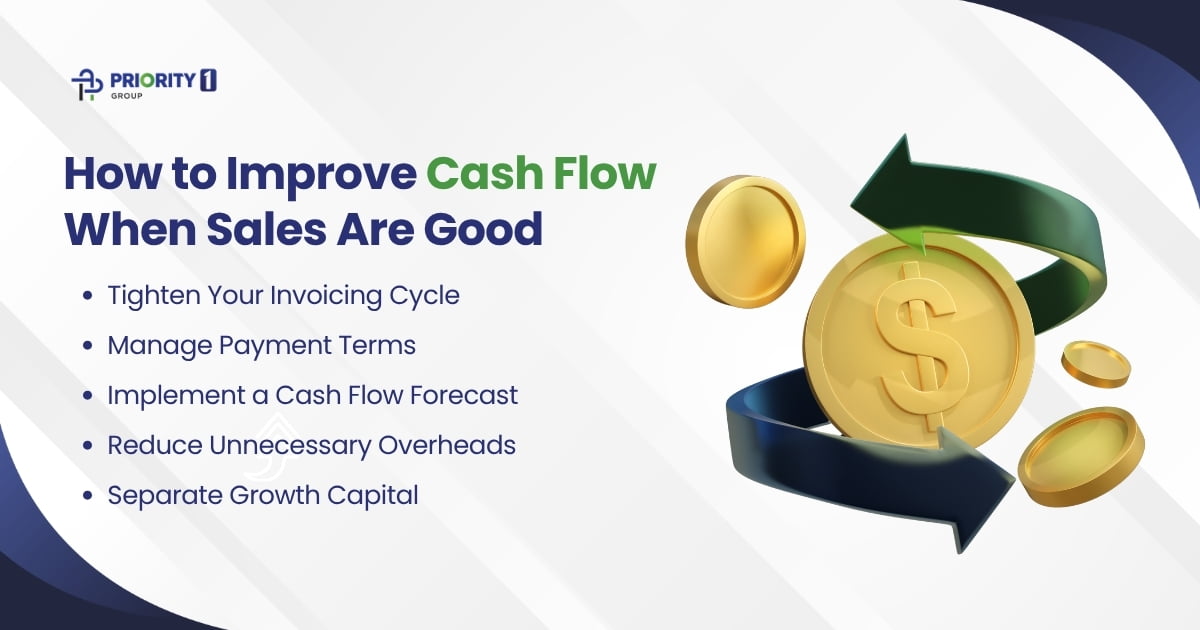
Good sales should strengthen your financial position, not weaken it. Here’s how to stay ahead of the cash flow curve:
Invoice immediately after service delivery and include clear payment terms. Use automated reminders to follow up on overdue accounts.
Negotiate longer payment windows with suppliers while encouraging customers to pay sooner.
Review your upcoming 3–6 months of inflows and outflows. This forecast helps you anticipate shortfalls and adjust before issues arise.
Audit your expenses regularly cut wasteful subscriptions and streamline operations.
Set aside part of your profits in a dedicated reserve account for expansion or emergencies.
At Priority1 Group, we understand that high sales don’t always mean strong financial health. Our expert team provides tailored cash flow management solutions that give business owners clarity and control over their finances.
We assist with:
By translating complex financial figures into actionable insights, we help you make informed decisions that protect both your profit and your liquidity.
Explore our services at Priority1 Group to see how we can help your business maintain strong cash flow while sustaining growth.
A profitable business can still fail if it runs out of cash. That’s the harsh reality of the cash flow trap. To thrive, businesses must move beyond focusing solely on sales or profit and prioritise cash flow management as a core part of their strategy.
By understanding the difference between profit and cash flow, managing expenses proactively, and seeking expert support, you can turn short-term success into long-term sustainability.
If your business looks profitable but struggles to maintain liquidity, Priority1 Group can help you find balance, transforming your numbers from paper profit to real, measurable success.