
Last Updated: July 2026
If you’ve searched for free bookkeeping software in Australia, you’ve probably noticed the same names appearing repeatedly. The problem is that many of those lists are outdated. Some recommend software that has been discontinued, while others feature products that no longer support Australian businesses.
This guide focuses only on bookkeeping software that Australian businesses can actually use today. We’ve reviewed each option based on its genuinely free offering, Australian tax compatibility, ease of use, and upgrade path.
Whether you’re a sole trader, freelancer, startup, or small business owner, this guide will help you choose the right solution without paying for features you don’t need.
If you’re short on time, here are our recommendations.
Need | Recommended Software |
Best overall free bookkeeping software | Zoho Books Free |
Best Australian-built option | Gimbla Starter |
Best for banking + bookkeeping | Thriday |
Best desktop software | Manager |
Best free payroll | Payroller Lite |
Best free payroll for multiple employees | e-PayDay FREEPAY |
Important: Many older articles still recommend Wave, SlickPie and Sunrise. These are no longer practical choices for Australian businesses either because they’ve been discontinued or no longer support Australia.
Tool | Free Tier Limit | Bank Feeds | GST/BAS Support | STP Payroll |
Zoho Books Free | Under A$50,000 annual revenue | Bank statement import & reconciliation | Yes | No |
Gimbla Starter | No revenue cap | No (Plus plan) | GST tracking only (BAS on Plus) | No |
Thriday | Free Starter plan | Yes | Partial | No |
Manager Desktop | Unlimited | CSV/OFX import | Yes | Basic |
GnuCash | Unlimited | Manual import | Manual setup | No |
Akaunting Community | Free self-hosted | No | Manual setup | No |
NCH Express Accounts | Very small businesses | No | No | No |
Payroller Lite | One employee | — | — | Yes |
e-PayDay FREEPAY | Three employees | — | — | Yes |
One thing you’ll quickly notice is that bank feeds are rarely included in genuinely free plans. Most require you to import bank statements manually, which is manageable for very small businesses but can become time-consuming as transaction volumes increase.
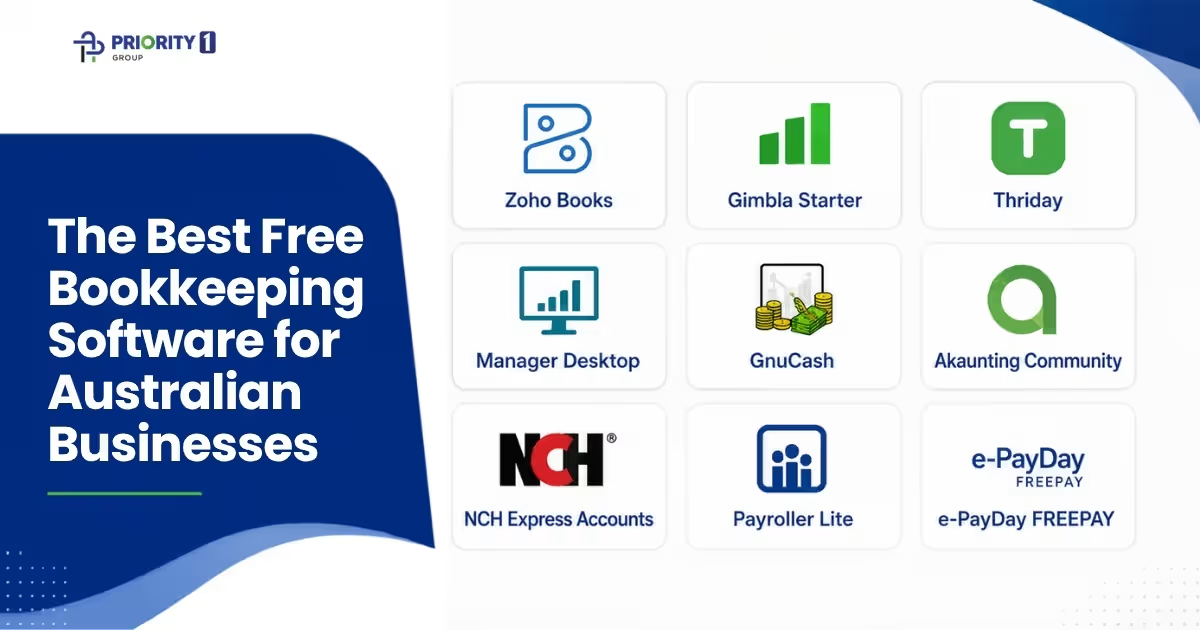
Zoho Books offers one of the strongest free bookkeeping plans currently available for Australian businesses.
The free plan is available to businesses with annual revenue below A$50,000, making it ideal for sole traders, startups and freelancers. Unlike many international products, it includes GST tracking, BAS-ready reports, invoicing, expense management and a polished mobile app.
You can also import bank statements and reconcile transactions, although automatic bank feeds require a paid subscription.
If supporting Australian businesses is important to you, Gimbla deserves serious consideration.
Unlike many competitors, Gimbla’s free Starter plan doesn’t impose a revenue cap, making it attractive for growing businesses that aren’t ready for paid software.
The platform includes proper double-entry bookkeeping, invoices, expenses, accounts payable, accounts receivable and GST tracking.
BAS lodgement, payroll, bank feeds and advanced reporting become available on the affordable Plus plan.
Small Australian businesses wanting long-term free bookkeeping.
Thriday approaches bookkeeping differently by combining banking and bookkeeping into one platform.
Instead of manually importing transactions later, they appear automatically through your Thriday business account, significantly reducing administration.
The free plan works well for sole traders wanting a simple financial workflow without spreadsheets.
However, companies, trusts and partnerships aren’t currently supported, limiting its appeal for larger businesses.
Sole traders wanting automated bookkeeping.
Manager has built a loyal following because its desktop edition remains genuinely free without restricting features.
It offers professional double-entry accounting, inventory, invoicing, GST reporting and financial statements comparable to many paid products.
The trade-off is convenience.
There are no live bank feeds, cloud access or mobile apps. Everything is stored locally, meaning you’re responsible for backups.
For experienced business owners comfortable using desktop software, Manager remains one of the best free accounting solutions available.
Businesses wanting powerful desktop accounting.
GnuCash is an open-source accounting application that’s been around for decades.
It’s powerful, flexible and completely free.
However, it isn’t designed specifically for Australian businesses.
GST settings need manual configuration, there is no BAS lodgement or STP support, and the learning curve is considerably steeper than cloud-based alternatives.
For users with accounting knowledge, GnuCash remains an impressive free option.
Experienced users comfortable with accounting concepts.
Akaunting is a free, self-hosted accounting platform suited to technically confident businesses.
It includes invoicing, expenses, customer management and reporting, while allowing complete ownership of your business data.
The downside is that you’ll need to manage hosting, software updates, security and backups yourself.
It’s a strong option for developers and IT-focused businesses but probably unnecessary for most small businesses looking for a simple bookkeeping solution.
Businesses wanting complete control over their software.
NCH Express Accounts is a straightforward desktop bookkeeping application aimed at micro businesses.
It handles basic invoicing, expense tracking and reporting without unnecessary complexity.
However, Australian compliance features are limited, meaning businesses registered for GST or employing staff will quickly outgrow it.
Very small businesses with simple bookkeeping needs.
If payroll is your primary concern, Payroller Lite is one of Australia’s strongest free STP solutions.
The free mobile version supports a single employee while providing STP Phase 2 reporting, payslips and automatic tax calculations.
It’s important to remember that Payroller is payroll software, not complete bookkeeping software.
Many businesses successfully combine Payroller with another bookkeeping application.
Businesses with one employee.
FREEPAY is another excellent Australian payroll solution.
It supports up to three employees at no cost while remaining compliant with STP requirements.
Like Payroller, it’s designed for payroll rather than bookkeeping, making it an excellent companion to software such as Zoho Books or Gimbla.
Micro employers needing free payroll compliance.
Many business owners assume products like Xero, MYOB, QuickBooks and Reckon belong on lists of free bookkeeping software.
They don’t.
These products offer free trials, typically lasting around 30 days, before requiring a paid subscription.
Free trials are useful for evaluating software, but they shouldn’t be mistaken for permanent free bookkeeping solutions.
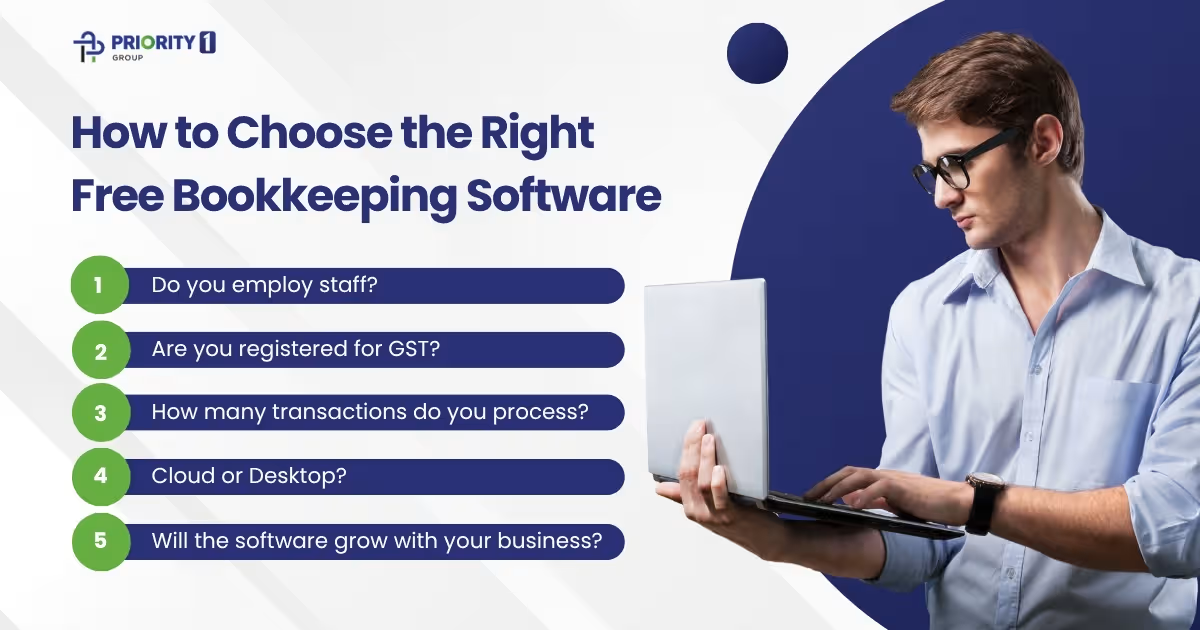
Before choosing any bookkeeping software, ask yourself five simple questions.
If yes, you’ll need STP-compliant payroll software.
Choose software that supports GST tracking and BAS-ready reporting.
Manual imports work well for businesses processing fewer than 30 transactions per month. Beyond that, bank feeds become increasingly valuable.
Cloud software offers accessibility and easier collaboration.
Desktop software provides greater control but requires regular backups.
A free plan that works today may become restrictive once your revenue or staff numbers increase.
Australian businesses need more than basic bookkeeping.
If you employ staff, your software should support Single Touch Payroll (STP) and help you meet Payday Super obligations introduced from 1 July 2026.
Businesses registered for GST also need reliable GST tracking and BAS-ready reporting.
Many genuinely free bookkeeping tools don’t include these compliance features, which is why some businesses use separate payroll software alongside their bookkeeping platform.
Free bookkeeping software works extremely well for many sole traders and micro businesses.
Eventually, though, every business reaches a point where paid software or outsourced bookkeeping becomes more cost-effective.
Common signs include:
At that point, the monthly subscription often costs far less than the time spent managing manual processes.
Choosing the right software is only part of the equation.
Maintaining accurate records, processing payroll, preparing BAS, reconciling bank accounts and staying compliant with changing ATO requirements all require ongoing attention.
At Priority1 Group, we help Australian businesses simplify bookkeeping, payroll, BAS preparation and financial administration. Whether you’re starting with free bookkeeping software or ready to migrate to Xero or MYOB, our experienced team can help you choose the right solution and keep your books accurate throughout the year.
